Exploring Technology for Human Well-Being: My Experience at IICRO 2026
The development of technology is currently progressing at a very rapid pace and bringing changes to various aspects of human life. Artificial Intelligence (AI), brain activity monitoring technologies, and robotics are increasingly being utilized to support education, healthcare, business, and everyday activities. However, behind all these conveniences, an important question arises: How can we ensure that technology truly benefits humanity?
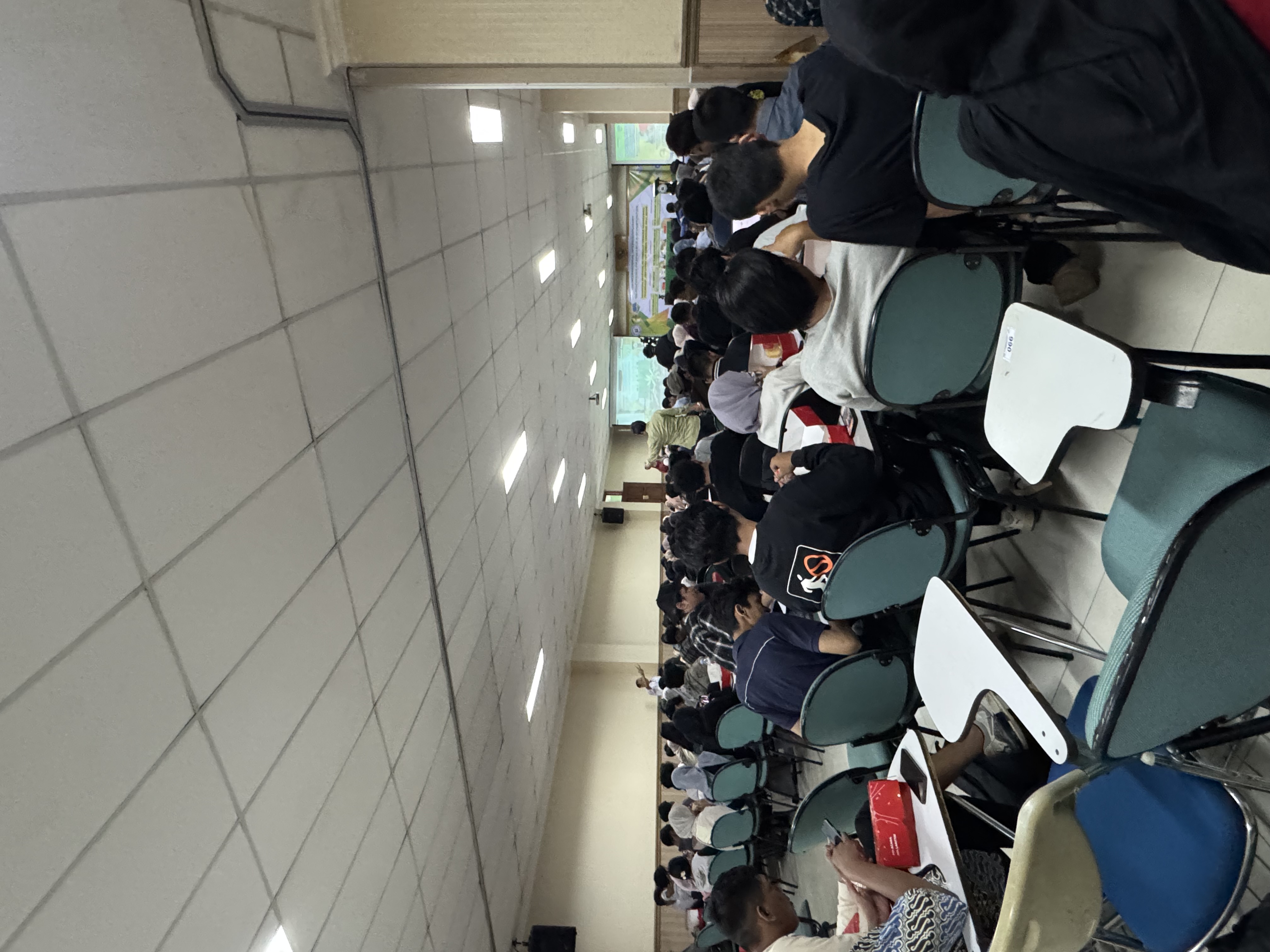
On September 25, 2026, I had the opportunity to attend the 4th International Interdisciplinary Conference on Research and Innovation (IICRO 2026), which was held at the Aula of Universitas Raharja. The seminar carried the theme “Advancing Artificial Informatics Through Engineering, Psychology, and Ethics for Human-Centered Well-Being.”
Through this seminar, I gained insights from three keynote speakers from Yemen, Malaysia, and India. Each speaker discussed a different perspective, ranging from Inclusive AI and Responsible AI, EEG and neurofeedback technology, to the application of AI and robotics in healthcare.
For me, this seminar was not only an opportunity to learn about technological developments but also a reminder that technological advancement should always go hand in hand with human needs, ethics, and responsibility.
Inclusive AI and Responsible AI: Using AI Inclusively and Responsibly
The first presentation, delivered by a speaker from Yemen, discussed the concepts of Inclusive AI and Responsible AI. This topic was interesting because it reminded me that the use of AI should not be evaluated solely based on its speed and ability to complete tasks. AI should also be developed to provide benefits fairly and be used responsibly.
Inclusive AI refers to the development of AI that takes into account the needs and differences of individuals, including language, culture, economic conditions, and physical abilities. The goal is to ensure that AI technology can be accessed and provide benefits to various groups within society, rather than only benefiting certain groups.
This concept is important because AI is now being used in various fields, including education, healthcare, business, and research. If the data used to train AI does not represent the diversity of society, the system may produce biased or less accurate decisions. For example, an AI system used in the recruitment process may produce unfair results if its training data does not adequately represent candidates from different backgrounds.
In addition, the speaker discussed the use of AI to support educational and research activities. Several tools that can be used include Speech Notes to help convert speech into text, TTSMaker to convert text into speech, Consensus and Connected Papers to assist with research reference searches, as well as Canva and Gamma to support the creation of presentation materials. Tools such as Notebook and Google Storybook can also be utilized to support learning and information presentation.
Although AI can help accelerate various tasks, the results it provides still need to be reviewed. AI can generate inaccurate information, so users should not accept all of its answers without verification.
This relates to the concept of Responsible AI, which emphasizes the use of AI while considering fairness, transparency, security, privacy, and human responsibility. In education, AI should assist teachers and students in the learning process rather than replace their roles and thinking.
The presentation also emphasized the importance of ethics. For example, using AI to answer surveys or interviews on behalf of another person is inappropriate because the answers should reflect the actual experiences and opinions of the person concerned.
From this presentation, I understood that AI can indeed be a useful supporting tool, but humans still need to think critically, verify information, and take responsibility for the results of their work. The ability to use AI needs to be balanced with the ability to determine whether its output is accurate, relevant, and ethical.
EEG and Neurofeedback: Understanding Brain Activity and Human Emotions
The second presentation was delivered by a speaker from Malaysia and focused on Electroencephalography (EEG), brain mapping, and neurofeedback technology. Unlike the first presentation, which focused on responsible AI use, this discussion demonstrated how technology can be used to study brain activity and its relationship with human conditions.
EEG is a technology used to record the electrical activity of the brain through sensors placed on the scalp. This activity can be analyzed to observe patterns in brain signals that change over time. In addition to EEG, there is quantitative EEG (qEEG), a quantitative analysis approach that can use methods such as the Fast Fourier Transform (FFT) to break down signals into frequency components.
In this presentation, I also learned about several types of brain waves, including delta, theta, alpha, beta, and gamma waves. In general, these waves have different frequency ranges and may be associated with different states of brain activity. Delta waves, for example, are commonly associated with deep sleep, while alpha activity may be observed during relaxed states. Beta activity is often associated with alertness and mental processing.
The speaker also introduced NEPIA (Neurophysiological Interface of Affect), which relates to understanding the relationship between physiological activity and emotions. In the discussion, emotions can be understood through two dimensions: valence and arousal. Valence describes whether an emotional experience feels pleasant or unpleasant, while arousal indicates the level of activation or intensity associated with the emotion.
Furthermore, there is SLORETA, a method that can be used to estimate the sources of electrical brain activity based on EEG data and produce a mapping of brain activity. The results of this analysis can help researchers understand activity in specific areas of the brain, although interpretation still requires careful consideration.
The presentation also discussed neurofeedback or brain training. In general, neurofeedback uses feedback based on measurements of brain activity to help individuals learn to regulate their brain activity patterns through training.
In my opinion, this presentation was interesting because it demonstrated how technology can be utilized to study the relationship between brain activity, emotions, and concentration. I also realized that technology is not only used to process digital data but can also help humans understand themselves through scientific approaches.
AI in Healthcare and Robotics: Technology for Better Human Well-Being
The third presentation was delivered by a speaker from India and discussed the application of AI in healthcare and robotics. This presentation demonstrated how technological developments can be utilized to support safety, healthcare services, and everyday life.
One of the applications of AI discussed was fatigue detection through facial video analysis. In this process, video footage can be divided into a number of frames and analyzed using an AI system. Information from these images can be used to identify signs associated with fatigue. Technologies like this have the potential to improve safety, particularly in situations that require a high level of concentration, such as driving. However, detection results still need to be interpreted according to the capabilities and limitations of the system.
In addition, the speaker explained the potential use of technology to detect signs of alcohol-related impairment in a non-invasive manner. Such applications may support safety efforts, for example, in the context of driving. Nevertheless, the results of detection systems still need to be validated and should not be considered conclusive evidence without appropriate examination.
In healthcare services, AI and robotics are also increasingly being utilized to assist with patient examinations. Robots can interact with patients using specific languages and help conduct initial examinations, such as measuring blood pressure and body temperature. With technological support, some stages of healthcare services may become more efficient and help reduce the workload of healthcare personnel.
The application of robotics can also support elderly people. Robots designed to interact with humans can provide companionship, engage in conversations, provide entertainment, and assist with certain activities at home. The presence of such technology has the potential to support daily activities and provide companionship, although it cannot completely replace the need for social relationships and human attention.
At the end of the presentation, the speaker emphasized the importance of keeping up with technological developments. Several fields with significant potential for future development include Artificial Intelligence, robotics, security, and blockchain.
As a Digital Business student, I see that these technological developments create opportunities to explore various innovations that can be applied in both business and public services. However, their implementation should still take into consideration user needs, security, and the actual benefits they provide.
Personal Reflection: Technology Should Be Human-Centered
After learning about the three presentations at the IICRO 2026 seminar, I realized that technology has a close relationship with various aspects of human life. Inclusive AI emphasizes the importance of fairness and accessibility, EEG and neurofeedback demonstrate how technology can help us understand brain activity, while AI and robotics show the potential of innovation in supporting healthcare and everyday activities.
What left the strongest impression on me was the realization that technological sophistication is not always the primary measure of its success. Technology must also consider human needs, safety, ethics, and its potential impact. An innovation becomes more meaningful when it is capable of providing real benefits without neglecting human values.
From these three presentations, I gained a new perspective that technological development needs to progress alongside an understanding of human beings. Technology is not merely a tool for completing tasks more quickly, but also a means of creating solutions that are useful, fair, and aligned with the needs of society.
Attending the IICRO 2026 seminar gave me a new understanding of the significant potential of technology to help people, from supporting learning processes to improving the quality of healthcare services. The presentations from the three keynote speakers also demonstrated that every innovation comes with both benefits and challenges that need to be understood.
As a Digital Business student at Universitas Raharja, I have come to realize that understanding technology is not only about knowing how to use it, but also about understanding the problems it is intended to solve and its impact on society. Therefore, the ability to adapt, think critically, and use technology ethically are important skills that I need to continue developing.
This seminar reminded me that the future is not only about creating smarter technology, but also about making wiser decisions in how we use it.
I hope that the knowledge and insights I gained from this seminar will serve as valuable foundations for me to continue learning, innovating, and utilizing technology responsibly, both in my academic activities and throughout my future career in the field of Digital Business.
Tangerang, Indonesia